
San Jose, CA / South Bay
Custom Railings in San Jose, CA | Iron, Cable, Glass & Aluminum Railings
Measured at your home, drawn to San Jose's 42-inch guard and 4-inch sphere rules, and welded in our own shop, with permits and HOA paperwork handled. Call (408) 409-8723 for a free on-site estimate.
- Licensed & InsuredEvery job
- In-Shop FabricationBuilt to measure
- Free On-Site EstimatesWritten ranges
Custom Railings in San Jose and Across the South Bay
San Jose Custom Railing builds custom railings in San Jose and the rest of Santa Clara County from steel, stainless cable, tempered glass, and aluminum, measured at your home and welded in our own shop. One week that might mean an iron entry rail for a Willow Glen bungalow, a cable guard for an Almaden Valley view deck, and iron balusters for a two-story foyer in Evergreen. The next it might be ADA handrails for a downtown storefront and balcony guardrail repairs for an apartment owner working through an SB 721 report.
San Jose is a big, older housing market. The Census Bureau's American Community Survey (ACS 2020–24) counts 345,066 housing units in the city, about 60% of them built before 1980, with a median build year of 1976. That means thousands of original railings are wearing out at once: wood deck rails dried out by rainless summers, iron pickets rusting where they meet concrete, and guards built shorter than today's code. It also means plenty of 1980s and 1990s homes with builder-grade oak stair rails that are ready for something cleaner.
We run the whole project under one roof: free on-site measure, shop drawings, code check, permit and HOA submittals, fabrication, finishing, and installation. You can get an instant price range with our railing cost calculator, browse every railing service we offer, or read how our shop works. When you are ready to talk, call (408) 409-8723 any day of the week between 7am and 6pm.
Licensed & Insured Free On-Site Estimates In-Shop Fabrication Locally Owned & Operated Permit & HOA Help Local 408 Number
Why Choose Us for Your San Jose Railing
Drawn to San José's Own Code Guide
The City of San José publishes a 2025 Residential Construction Guidelines book, and we draw to it. Guards stand at least 42 inches tall. Openings stop a 4-inch sphere, with 4-3/8 inches allowed at the open side of a stair and 6 inches at the stair triangle. Handrails sit 34 to 38 inches above the nosing, and a city policy bars handrails with a vertical drop, a 90-degree bend, or a turn sharper than 45 degrees. Every drawing is checked against those numbers before we cut steel.
Posts Anchored for Fault Country
USGS describes the Hayward fault zone reaching southeast to the Evergreen area of east San José and the Calaveras fault bounding the valley's eastern side, while the San Andreas runs through the Santa Cruz Mountains to the west. A residential guard must resist a 200-pound concentrated load at its top rail. We meet that with through-bolted and welded connections tied into solid framing or concrete, never glue or a lone lag screw, and every post detail is shown on the shop drawing you approve.
Permits, HOA Packets, and Lasting Finishes
San José's Decks page requires a permit to install, replace, or repair a deck that is 30 inches or more above ground, attached to the house, 200 square feet or larger, or serving an exit door or door landing. We prepare the drawings for SJPermits and SJePlans, assemble HOA submittals with finish samples, and specify oven-cured powder coat over zinc primer, or hot-dip galvanizing where steel stays wet, so the finish outlasts six dry months a year.
Overdue SB 721 Report or a Rail That Moves? Book Your Free Measure Now
California's first SB 721 inspection deadline for apartment balconies, January 1, 2026, has come and gone, and reports flagging guardrail repairs are reaching owners across San José. Homeowners have a different clock. The dry months from May through October are prime time for outdoor railing work, and permit or HOA review can add weeks before fabrication starts, so the earlier we measure, the earlier your rail goes up. A loose guard is also a fall risk every day it stays as it is. Tell us about your project below and we will call back to book a free on-site visit, with a written price range after the measure.
Rather talk it through? Call (408) 409-8723, seven days a week from 7am to 6pm.
Our Railing Services in San Jose
Every railing below is designed, welded, finished, and installed by our own crew. Each tile opens a page with specs, pricing, and code notes, or you can see them side by side on the railing services overview.
 Wrought Iron Railings
 Cable Railings
 Glass Railings
 Aluminum Railings
 Interior Stair Railings
 Deck & Balcony Railings
 ADA & Commercial Handrails
 Railing Repair & SB 721
 Custom Gates
Solutions for Property Owners, HOAs, and Builders
Apartment owners, condo boards, general contractors, and estate homeowners each need something different from a railing shop, from matching dozens of balconies to meeting a framing schedule. Our railing solutions hub explains how we handle each.
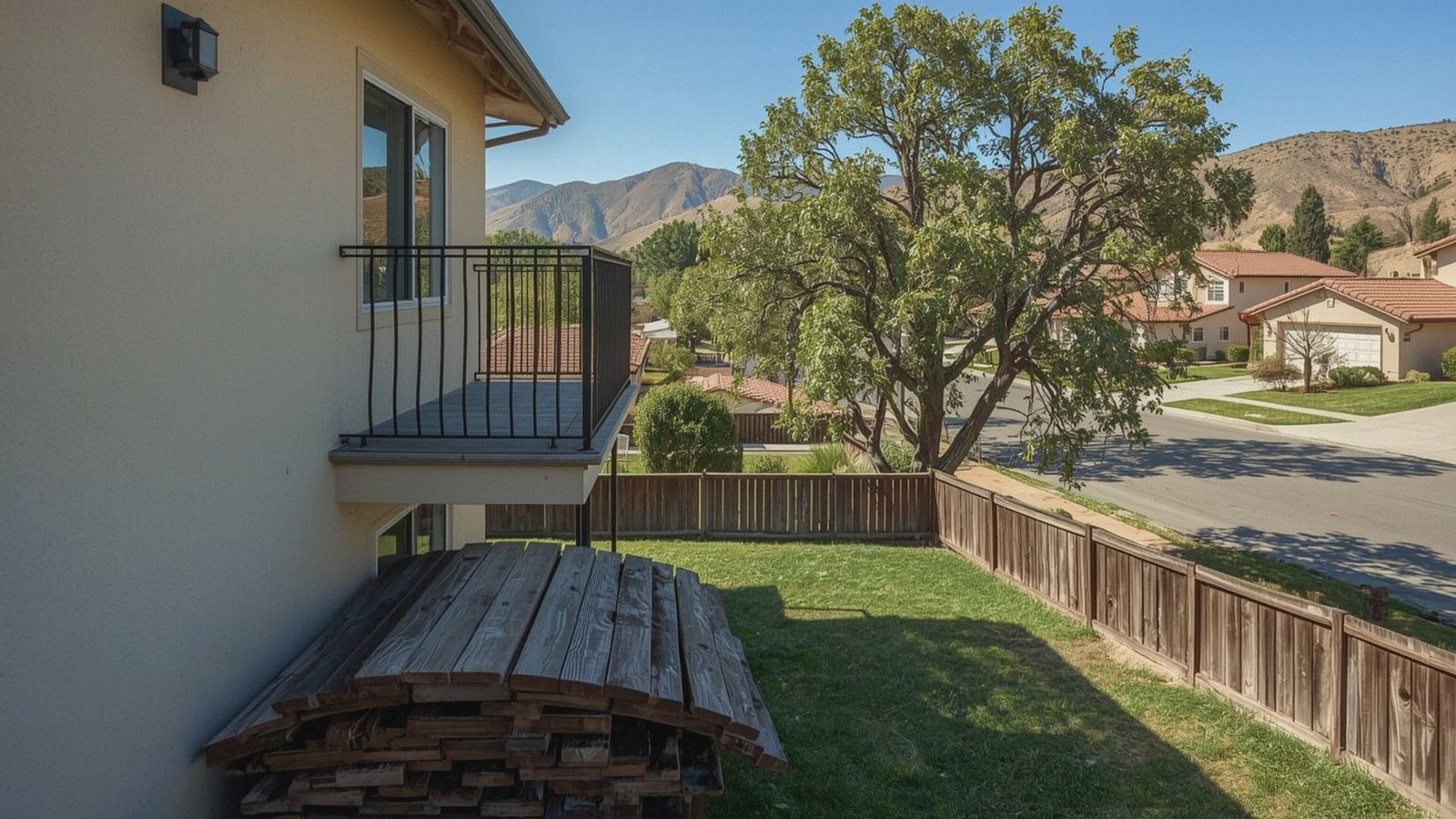
Get an Instant Railing Price Range
Choose where the railing goes (a deck or balcony, outdoor steps, or an interior staircase), pick a material and style level, and enter your lengths. The estimator applies the same 2026 per-foot ranges shown in the cost table further down this page, adds allowances for stair sections, corners, removing an old rail, and a typical permit, and returns a low-to-high installed range. Send it to us and a free on-site measure turns it into a firm quote. For a longer walkthrough of what drives each number, open the full railing cost calculator.
The price estimator needs JavaScript turned on. Call (408) 409-8723 and we will give you a range over the phone.
What Types of Railing Problems Do We Fix?
Most calls start with something that wobbles, rusts, or no longer meets code. These are the problems we see most often around San José, and how our railing repair and SB 721 service handles each one.
Loose Posts and Pulled Anchors
A guard post that rocks when you lean on it has lost its grip: lag screws backing out of a softened rim joist, a cracked base plate, or grout crumbling around a post set in concrete steps. The California Residential Code expects a home guard to hold a 200-pound concentrated load at the top, and a moving post cannot. We open the connection, replace rotted framing, and re-anchor with through-bolts or welded plates. On wood decks we follow the city guide's detail of doubled 2x10 framing with at least 16 inches of full-depth blocking at each guard post.
Rust at Post Bases and Inside Tubing
About 91% of the rain at San José's airport station falls between November and April (NOAA 1991–2020 normals), and a lot of it pools where posts meet concrete. Sprinklers keep those spots wet all summer. Rust starts at the base, inside tubing with no weep holes, and under cracked paint, then streaks down stucco. We cut out weakened steel, weld in new sections, and refinish with zinc-rich primer under powder coat. If most of the rail is compromised, we will tell you replacement is the better spend.
Dried-Out and Checked Wood Deck Rails
An average July at San José airport brings 0.00 inches of rain and an 80.8°F high, and central San José averages 82.2°F. Months like that shrink and split wood rails until the fasteners loosen. Census data shows 41.8% of the city's housing was built between 1960 and 1979, so many decks still carry an early wood guard. We replace failing wood rails with steel, aluminum, cable, or glass, and we probe the framing first so new posts never go onto soft wood.
Short Guards on Pre-1980 Homes
About 60% of San José homes were built before 1980, and many still have 36-inch guards that followed the rules of their day. Current California code calls for a 42-inch guard wherever a walking surface sits more than 30 inches above grade, measured within 36 inches horizontally. An existing rail can usually stay, but replacing more than about half of a guard is commonly treated as new work that must meet current code. We verify the rule with the San José Building Division before drawing a partial replacement.
Wide Gaps and Missing Balusters
The 4-inch sphere rule says no opening in a guard may pass a 4-inch ball. San José's construction guide allows 4-3/8 inches at the open side of a stair and 6 inches in the triangle formed by the tread, riser, and bottom rail. Wider picket spacing on older railings, a bottom rail set too high, or one missing spindle can each fail that test. We re-set loose balusters, fabricate matching pickets for missing ones or add infill, and gauge every opening before we pack up.
Handrails That Stop, Drop, or Turn Too Sharply
A stair handrail must sit 34 to 38 inches above the tread nosings, run continuously for the full flight, and be easy to grip: a Type I round rail measures 1-1/4 to 2 inches across, with at least 1-1/2 inches of clearance to the wall. San José's guide adds a city policy of no vertical drop, no 90-degree bend, and no change of direction over 45 degrees. Older stairs often break continuity at a landing or newel. We fabricate continuous steel rails with proper returns, or extend the rail you already have.
SB 721 and E3 Balcony Findings
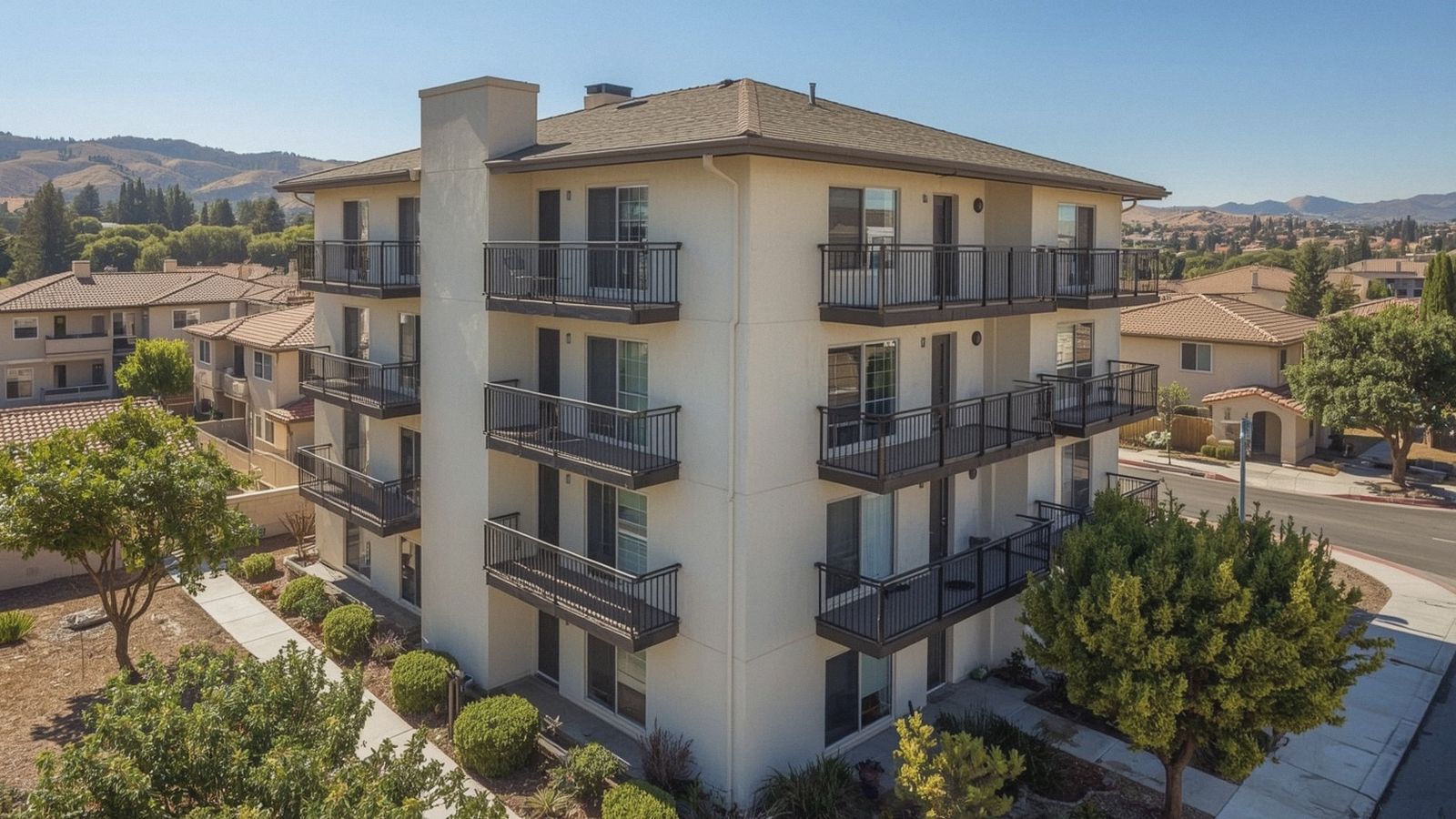
San José has 113,216 housing units in buildings with three or more units (ACS 2020–24). Wood-supported balconies, walkways, and stairs more than 6 feet above ground on those buildings fall under SB 721, railings included. San José's E3 page says a licensed professional must send an immediate-hazard report to the owner and the City within 15 days, and non-emergency repairs need a permit application within 120 days. We repair or replace the guardrails your report flags and coordinate with your inspector. Read our SB 721 guide for San Jose apartment owners or see balcony railing replacement.
What Types of Railings Do We Build in San Jose?
We fabricate every common railing material in-house, so we can recommend what fits your house and budget instead of whatever one supplier stocks. Each type links to its own page with specs and options.
Wrought Iron and Ornamental Iron
Iron suits San José's older neighborhoods: Victorian porches in the Hensley district, which the City calls the largest concentration of Victorian-era homes in San José, and bungalow or Spanish Colonial Revival entries in Naglee Park. We weld mild carbon steel pickets, rails, and collars, add hand-forged scrolls and twisted bars when the design calls for them, and finish over zinc primer. Installed ornamental iron runs about $65–$135 per linear foot, and fully hand-forged work $300–$900. Homes in a landmark district may need a Historic Preservation Permit first. More on our wrought iron railings page.
Stainless Cable Railings
Cable is the pick for decks facing the Diablo Range or the Santa Teresa Hills, since 1x19 stainless aircraft cable at 1/8 or 3/16 inch nearly disappears from a few feet away. The engineering lives in the frame: posts about 4 feet apart limit cable deflection, and cables spaced about 3 inches apart keep a tensioned run inside the 4-inch sphere rule. End and corner posts carry the pull of every cable, so we size them heavier. Installed cable runs $75–$260 per linear foot, roughly $9,000 for a 50-foot deck. See cable railings.
Tempered and Laminated Glass
Glass gives the clearest view and blocks afternoon wind. San José's construction guide lists all glazing in guards and railings as a safety-glazing location, so we use only tempered or laminated panels, in post-and-clamp, standoff, spigot, or frameless base-shoe systems sized for guard and infill loads. Glass is the premium tier at roughly $150–$600 per linear foot installed, set mostly by panel thickness, hardware, and custom cuts. Expect to rinse it often through dusty summers. Compare systems on our glass railings page.
Powder-Coated Aluminum
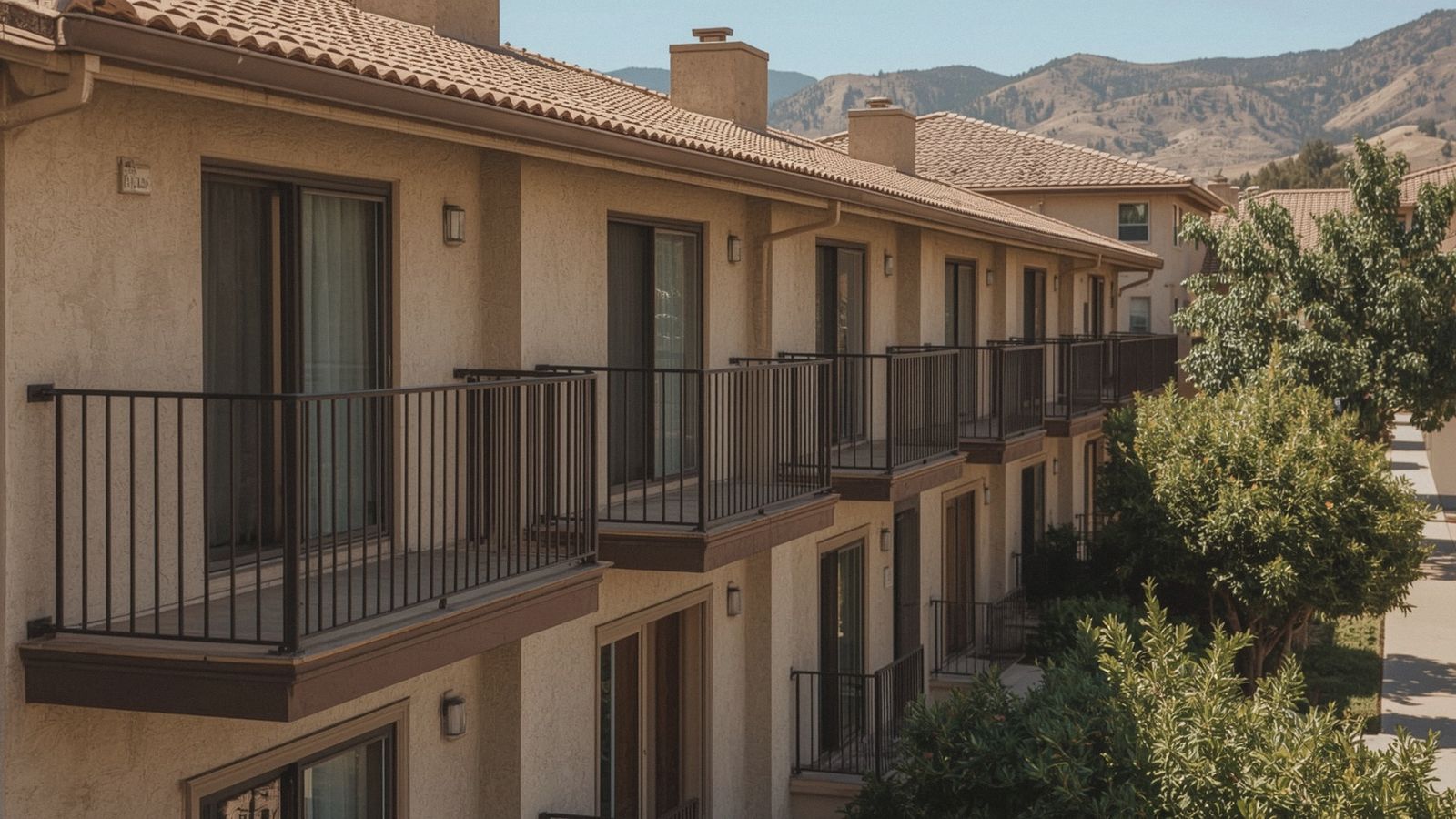
Aluminum cannot rust, stays light on long balcony runs, and takes powder coat in almost any color on an HOA palette. That makes it a natural fit for San José's townhomes, 11.2% of the city's housing (ACS 2020–24), and for condo associations that want every balcony to match. Where the design allows, we weld sections instead of relying on snap-together kits, for a stiffer rail. Light colors also stay cooler to the touch in July. Installed aluminum runs about $50–$200 per linear foot. See aluminum railings.
Interior Stair Railings and Baluster Swaps
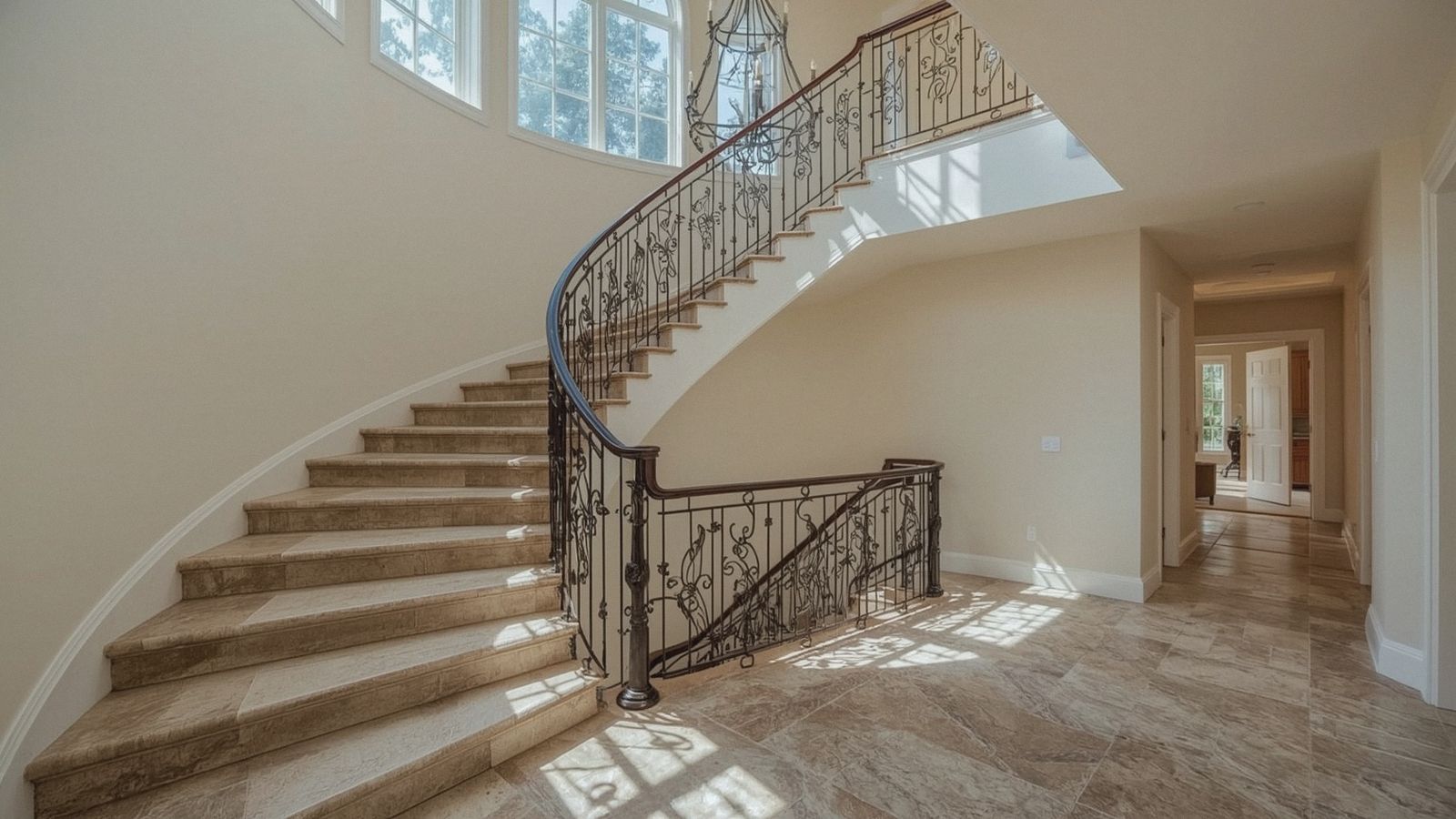
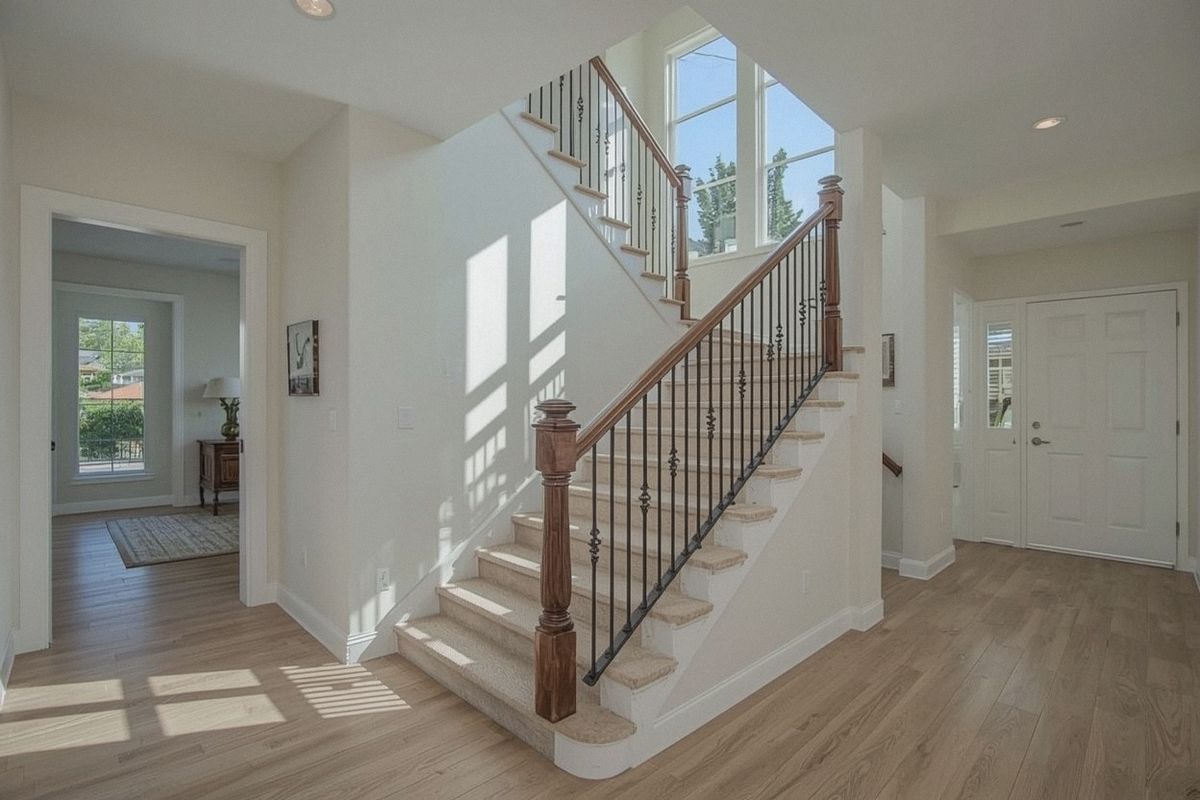
About 21% of San José's housing went up in the 1980s and 1990s (11.8% and 9.2%, per ACS), and many of those two-story homes still have an oak handrail over painted or stained wood spindles. Swapping the spindles for iron balusters, or replacing the whole rail with steel, cable, or glass, modernizes a foyer without a full remodel. Interior work runs about $40–$100 per linear foot, roughly $900–$2,500 for a typical 25-foot stair. Details on interior stair railings.
Deck and Balcony Railings
San José's Decks page (updated March 2026) requires a permit when a deck is 30 inches or more above ground at any point, attached to the house, 200 square feet or larger, serving a required exit door, or acting as a door landing, and that applies to repairs and replacements too. Most second-story balconies and hillside decks qualify. We build deck and balcony guards in every material, with drink rails, gates, and stair returns. Exterior deck railing spans $20–$600 per linear foot by material. See deck and balcony railings and our San Jose railing permit guide.
ADA and Commercial Handrails
Commercial work follows the California Building Code: guards carry a 50-pound-per-linear-foot load in addition to the 200-pound point load (CBC 1607.9), infill must resist 50 pounds on a 1-square-foot area, and ADA handrails sit 34 to 38 inches high with 1-1/2 inches of wall clearance, extending at least 12 inches past the top riser. We build stainless and powder-coated steel handrails for ramps, storefronts, apartment stairs, and offices from North San José to downtown. Budget about $20–$120 per foot, material plus labor. See ADA and commercial handrails.
Custom Gates
We build pedestrian, garden, side-yard, and driveway gates in steel and aluminum to match a new railing, with welded frames, gate stops, and hinges sized for the swing. Pool gates are built self-closing and self-latching. Hillside lots bring local rules: Los Gatos's hillside standards set entry gates back at least 18 feet from the street, and a draft update to Cupertino's safety element strongly discourages electric gates in High and Very High fire zones. Learn more on our custom gates page.
How a Custom Railing Gets Built
Seven steps take a railing from a tape measure to a finished, inspected install. You approve the design before any steel is cut.
1. Free On-Site Consult & Measure
We measure each run, rise, and corner, look at what the posts will anchor into, and talk through materials, finishes, and budget at your property.
2. CAD & Shop Drawings
You get drawings showing heights, post spacing, infill, and every connection, plus finish options, so nothing about the design is a surprise later.
3. Code, Permit & HOA Review
Each drawing is checked against the 42-inch guard, 4-inch sphere, and 34–38 inch handrail rules, then packaged for SJPermits, SJePlans, or your HOA.
4. Shop Fabrication & Welding
Steel is cut, fitted, and welded on jigs in our shop, where joints come out tighter and cleaner than work welded in a driveway.
5. Finishing
Parts are cleaned and zinc-primed, then powder coated and oven cured, or hot-dip galvanized when they will sit wet or near the baylands.
6. Installation & Anchoring
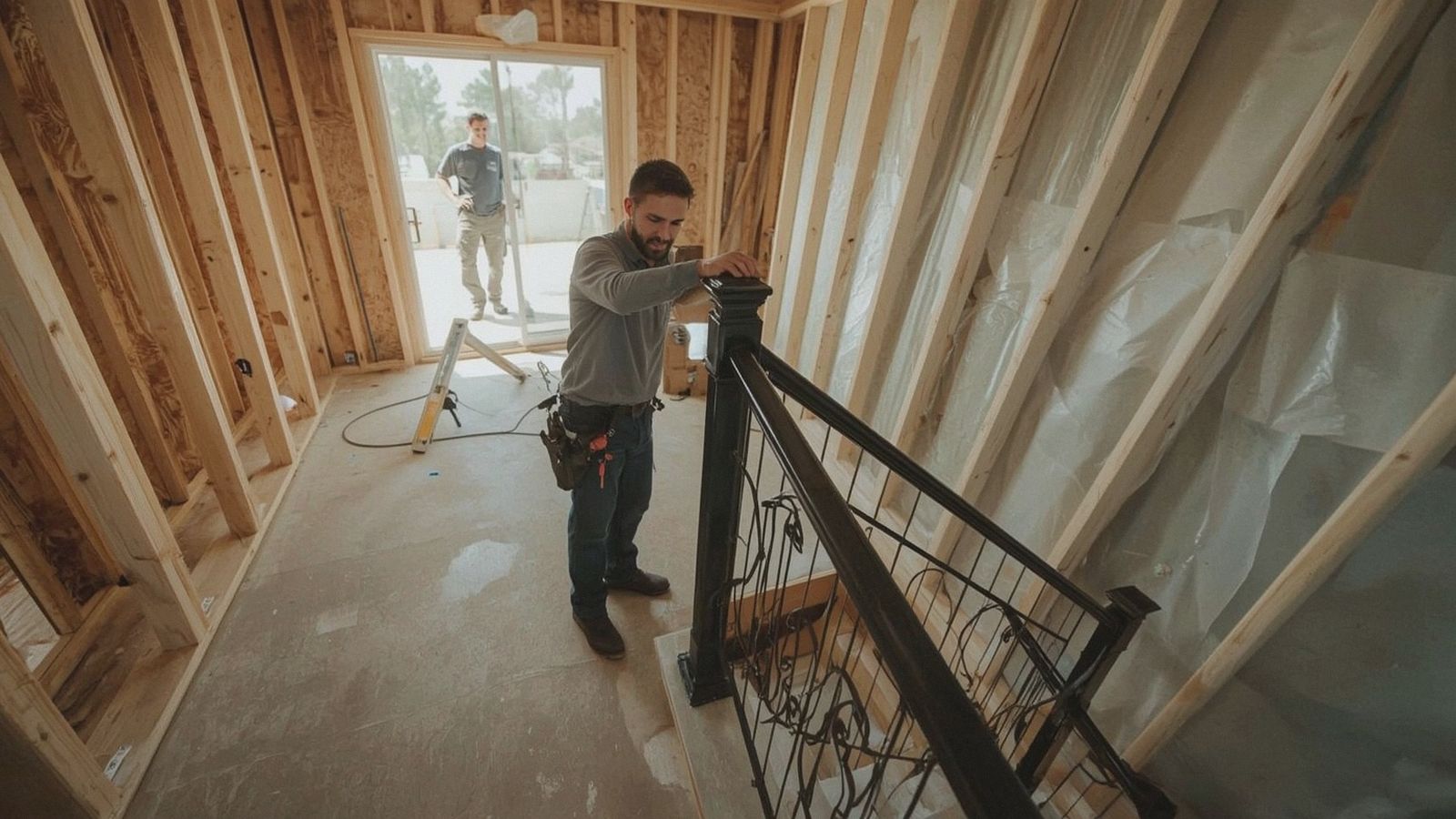
Posts go in with through-bolts, welded base plates, or core-drilled sockets, chosen for your framing or concrete, then the rail is plumbed and tensioned.
7. Final Code & Safety Check
We measure heights, gauge every gap, load-test post stiffness by hand, and meet the city inspector when your project carries a permit.
What Custom Railings Cost in San Jose (2026)
Honest 2026 installed ranges for San José and the South Bay, where Silicon Valley labor costs keep prices toward the upper half. Use them to budget, not as a quote.
| Railing type | Installed per linear foot | Typical project |
|---|---|---|
| Wrought iron / ornamental | $65–$135 (hand-forged $300–$900) | ~$700–$6,000 |
| Aluminum (powder-coated) | $50–$200 | ~$400–$4,800 |
| Cable railing | $75–$260 | ~$3,750–$13,000 (about $9,000 for 50 ft) |
| Glass railing | $150–$600 | Premium tier |
| Interior stair railing | $40–$100 | ~$900–$2,500 (about 25 ft) |
| Exterior deck railing | $20–$600 | ~$400–$4,800 |
| ADA / commercial handrail | $20–$120 per ft, material plus labor | Varies by run |
- Building permits typically add about $50–$500, depending on the city and scope.
- Corners and turns add roughly 20–30%, and stair runs cost more than level runs.
- Hillside access in the Almaden, Evergreen, and Silver Creek foothills, HOA-specified finishes, and hand forging push toward the top of each range.
We quote a firm price only after a free on-site estimate. For a line-by-line breakdown, read our 2026 San Jose railing cost guide, or call (408) 409-8723.
Iron, Cable, Glass, or Aluminum: Which Fits Your Home?
Each material trades off look, upkeep, view, and price differently in the South Bay's climate. Here is how they compare.
| Material | Look | Dry season & heat | Bayside air | Fire zones | View | Upkeep | Per foot |
|---|---|---|---|---|---|---|---|
| Wrought iron | Classic, ornamental; suits Victorian and Revival homes | Holds up under powder coat; dark colors heat up | Needs zinc primer or galvanizing | Noncombustible | Pickets break up the view | Touch up chips before rust starts | $65–$135 |
| Powder-coated aluminum | Clean lines, any color | Light colors stay cooler | Will not rust | Noncombustible | Similar to iron | Rinse occasionally | $50–$200 |
| Stainless cable | Minimal, modern; suits Eichlers and view decks | Re-tension after the first season | Specify 316 stainless | Noncombustible frame; a wood cap adds fuel | Nearly open | Check tension yearly | $75–$260 |
| Tempered or laminated glass | Sleek, almost invisible | Unaffected by heat; shows dust | Stainless hardware recommended | Noncombustible | Fully open, plus a wind break | Frequent cleaning | $150–$600 |
All four outlast wood through a long dry season, and none of them burns like a wood rail at the deck edge. Still deciding? Our cable vs. glass vs. iron comparison goes deeper on views, HOAs, and Eichler homes.
Built for South Bay Conditions
A railing in the Santa Clara Valley has to handle earthquakes, a wildfire map that grew in 2025, a long rainless summer, and a lot of aging houses. Here is how each one shapes what we build.
Between the San Andreas and the Hayward-Calaveras System
USGS says the Hayward fault zone extends from San Pablo Bay southeast to the Evergreen area of eastern San José; its southeast extension was trenched on the Evergreen Valley College campus. The Calaveras, slipping about 14 millimeters a year along its central section, bounds the valley's east side and produced the 1979 Coyote Lake (M5.8) and 1984 Morgan Hill (M6.3) quakes. To the west, the San Andreas crosses the Santa Cruz Mountains, and the 1989 Loma Prieta quake (M6.9) heavily damaged Los Gatos. State Alquist-Priolo fault zones cross parts of east San José and Milpitas, and USGS puts the chance of at least one M6.7 or larger Bay Area quake before 2043 at 72%. No code calls for a special seismic railing, but shaking finds weak connections first, so we default to welded joints and through-bolted posts in solid framing.
The 2025 Fire Hazard Severity Zone Maps
The State Fire Marshal released new local maps on February 24, 2025, the first to add Moderate and High zones alongside Very High. San José adopted them on June 17, 2025 (Ordinance 31213), and by GIS count roughly 7,100 acres of the city are now Very High and about 15,800 High, mostly in the east and south foothills. ABC7 reported San José had the largest increase in High and Very High acreage of any Bay Area city. New homes and many additions in High and Very High zones (and anywhere in the State Responsibility Area) now fall under California's new Wildland-Urban Interface Code, which took effect January 1, 2026. Check with your building department for your project, and look up your address on the OSFM viewer at osfm.fire.ca.gov/fhsz. Metal and tempered glass railings are noncombustible, while a wood rail sits right at the deck edge where embers collect. Our wildfire-resistant railing guide covers the details.
An 8-Degree Climate Spread Across One Valley
NOAA's 1991–2020 normals put the average July high at 76.9°F at Moffett Field by the bay, 80.8°F at San José airport, 82.2°F in central San José, and 84.9°F in Los Gatos, which logs about 27 days a year at 90°F or above. Almost no rain falls from June through September. That heat and dryness fades cheap paint and splits wood, so we use oven-cured powder coat over zinc primer and steer clients toward lighter colors on sun-facing decks.
Damp Air Along the Baylands
Homes near the Alviso and Sunnyvale baylands get damp, salt-tinged marine air off the former salt ponds now being restored to tidal marsh. Bare painted steel does not last long there. For north San José, Alviso, and Milpitas jobs we lean on hot-dip galvanizing or zinc-rich primer under powder coat, 316 stainless for cable systems, and stainless fasteners throughout.
Housing Stock That Tells Us What to Expect
San José's median home was built in 1976, and 51.3% of its housing is single-family detached, with a median value of $1.23 million (ACS 2020–24). Ranch and tract homes from the 1960s and 1970s bring short guards, wide gaps, and rusted iron. Two-story homes from the 1980s through the 2000s bring oak rails and wood spindles. Mid-century Eichlers, including the 218-home Fairglen Additions tract in Willow Glen listed on the National Register in 2019, call for low, minimal steel and cable. Our Eichler railing ideas post shows what works.
Rules That Should Hold Steady Through 2031
California's AB 130 freezes new state and local residential building standards from October 1, 2025, to June 1, 2031, except for wildfire hardening. For homeowners, that means the 42-inch guard and 34–38 inch handrail rules you build to today should still apply for years.
Serving San Jose and Santa Clara County
Our crews cover San José and seven neighboring cities, each with its own building department, permit portal, and housing mix. Every city page covers the local rules in detail, and the service area page maps them all.
- San Jose: from Willow Glen and the Rose Garden to Almaden Valley, Cambrian, Berryessa, and Evergreen, with permits filed through the City Hall Permit Center at 200 E. Santa Clara St. and SJPermits.org.
- Santa Clara: 51.4% of homes sit in buildings with three or more units, so balcony and walkway guardrail work is a big share of what we do there, and the city takes every permit application electronically.
- Campbell: about 69% of homes were built before 1980, and the city's SB 721 handout requires a registered architect or engineer to design any deck repair more than 8 feet up.
- Milpitas: the newest housing in our area (median year built 1987, 35% built since 2000), which makes townhome stair and balcony upgrades more common than rust repair.
- Los Gatos: hillside homes where the Town's standards cap exterior color reflectivity and set entry gates back at least 18 feet from the street.
- Saratoga: 85% single-family detached with a median build year of 1967, and upper-story balconies facing an R-1 neighbor need an opaque wall at least 4 feet tall.
- Cupertino: about 64% of homes predate 1980, and parts of the western foothills are mapped Very High on the 2025 fire hazard maps.
- Sunnyvale: cool bayside summers (a 76.9°F July normal at nearby Moffett Field), published Eichler design guidelines, and 47.1% of homes in buildings with three or more units.
Nearby but not listed? Call (408) 409-8723 and ask whether we can reach you.
Schedule Your Free Railing Estimate
A guard that moves when you lean on it, a dated oak-and-spindle staircase, a view deck that deserves cable or glass, or an apartment building with an SB 721 repair list: we would like to see it in person. The estimate is free, on site, and comes with no pressure. You leave with a clear price range, a plan for permits and HOA review, and a straight answer on whether to repair or replace.
Call San Jose Custom Railing at (408) 409-8723, seven days a week from 7am to 6pm, or send us your project details online. Want to know more first? Read about our shop and process.
FAQ
Questions, Answered
Straight answers on cost, code, permits and materials. Still unsure? Call and ask.
How much does a custom railing cost per linear foot in San Jose?
Typical 2026 installed ranges are about $65–$135 per linear foot for ornamental iron (hand-forged $300–$900), $50–$200 for powder-coated aluminum, $75–$260 for stainless cable, $150–$600 for glass, and $40–$100 for interior stair railings. Corners, stairs, hillside access, and HOA finishes push costs up, and permits add about $50–$500. We confirm a firm price at a free on-site estimate.
Do I need a permit to replace a deck railing in San Jose?
Often, yes. The City of San José requires a building permit to install, replace, or repair a deck that is 30 inches or more above ground at any point, attached to the house, 200 square feet or larger, serving a required exit door, or acting as a door landing. Applications go through SJPermits.org, and plans upload through SJePlans. We prepare the drawings and handle the submittal for you.
How tall does a railing have to be in California?
Guards are required where a walking surface is more than 30 inches above grade, and they must be at least 42 inches tall. Openings must stop a 4-inch sphere. Stair handrails sit 34 to 38 inches above the tread nosings. Older homes may have 36-inch guards built under earlier rules; those can usually stay until the guard is replaced, but confirm with your building department.
Is cable railing allowed in California?
Yes, when it is built correctly. Cable infill must pass the same 4-inch sphere test as any guard, so we space cables about 3 inches apart and keep posts about 4 feet apart to limit deflection under load. We use 1/8 or 3/16 inch 316 stainless cable, size end and corner posts for the full tension, and re-tension after the first season.
Should I choose cable or glass railing for a view deck?
Cable costs less (about $75–$260 per linear foot versus $150–$600 for glass) and keeps a nearly open view. Glass gives a completely clear view and blocks wind, but shows dust and needs more cleaning in the dry season. Families with young climbers often prefer glass because it has no horizontal footholds. We can mock up both at your estimate.
Will an iron railing rust in the South Bay?
Bare or poorly painted steel will, especially where water pools at post bases or near the baylands. We clean and zinc-prime every part, then apply oven-cured powder coat, or hot-dip galvanize parts that will stay wet. Rinse the rail a few times a year and touch up chips quickly, and a finished iron railing should hold up for many years.
Can you replace wood stair spindles with iron balusters and keep my handrail?
Usually, yes. If your oak handrail and newel posts are solid, we remove the wood spindles and install iron balusters spaced to pass the 4-inch sphere rule, typically about $40–$70 per linear foot. If the handrail is loose, too low, or breaks continuity, we can replace it along with the balusters.
What does SB 721 mean for my San Jose apartment building?
SB 721 covers buildings with three or more units and wood-supported balconies, decks, stairways, walkways, and their railings more than 6 feet above ground. The first inspection deadline was January 1, 2026, and re-inspection runs every 6 years. San José tracks reports through its E3 program. We repair or replace the guardrails your licensed inspector flags and coordinate the permit.
Does my HOA need to approve a new railing?
Many HOAs in San José require architectural review before any exterior change, including railings. Expect to submit drawings, a color or finish sample, and sometimes photos of the existing rail. We prepare the drawings and finish samples so your board has what it needs. Condo associations also have SB 326 balcony inspections every 9 years.
What railing materials make sense in a fire hazard zone?
Steel, aluminum, iron, and tempered glass railings are noncombustible, unlike wood rails sitting at the deck edge where embers collect. Parts of east and south San José are mapped High or Very High on the 2025 maps. New homes and many additions there fall under California's new Wildland-Urban Interface Code, so check with your building department for your project.
Do you build railings for historic homes in San Jose?
Yes. We fabricate iron railings with period details for Victorian, Craftsman, and Revival homes. If your property sits in a City landmark district or conservation area such as Hensley or Naglee Park, the City's Decks page notes a Historic Preservation Permit may apply, and we prepare drawings that show the design clearly for that review.
What areas do you serve and when are you open?
We serve San José, Santa Clara, Campbell, Milpitas, Los Gatos, Saratoga, Cupertino, and Sunnyvale, plus nearby parts of Santa Clara County. Phones are answered seven days a week from 7am to 6pm at (408) 409-8723, and on-site estimates are free.
Free on-site estimate
Ready to get started?
San Jose Custom Railing designs, fabricates and installs custom railings across San Jose, CA and the South Bay. Licensed and insured, drawings checked against California code, and permit and HOA paperwork handled for you.